Schrödinger’s Cat: A cat, along with a flask containing a poison, is placed in a sealed box shielded against environmentally induced quantum decoherence. If an internal Geiger counter detects radiation, the flask is shattered, releasing the poison that kills the cat. The Copenhagen interpretation of quantum mechanics implies that after a while, the cat is simultaneously alive and dead. Yet, when we look in the box, we see the cat either alive or dead, not a mixture of alive and dead.
The original Fit-PC slim may have been able to proclaim itself the “world’s smallest,” but with an 500MHz AMD Geode processor and no more than 512MB of RAM, it had a bit of difficulty with the “PC” side of the equation. Fit-PC looks to have gone some way towards improving that with its new Fit-PC 2, however, which matches the current nettop ranks by adding your choice of an Atom Z530 or Z510 processor. Otherwise, you can expect the usual 1GB of RAM, your choice of 2.5-inch SATA hard drive, built-in WiFi, a generous six USB ports, HDMI out, XP or Ubuntu for an OS, and support for full 1,920 x 1,080 resolution. From the looks of it, this one is just starting to roll out now, and will set you back between $245 and $400 depending on the configuration. Still looking for more? Then head on past the break for a quick hands-on video.
I was creating an iPhone widget icon for the Jotlet app (primarily for fun) and I noticed a few things and thought I’d share them with you, and create a psd kit for anyone wanting to do the same thing. I’m all about making things look uniform, so I used the traditional Apple iPhone app buttons as a template.
The first thing I noticed is that the iPhone screen is 160ppi. I’m not sure I’ve ever worked with a medium in a ppi other than 72 (other than print, of course), so I’m hoping I did this ok. I first created an empty photoshop doc sized 480 x 320 at 160ppi. I took the image of the iPhone here and cropped the screen out maintaining 3×2 aspect ratio. I pasted the result into the psd and scaled it up to fit. The icons in the result wound up being roughly 58×58px @ 160ppi, not including drop shadow. I made the icons in this kit exactly the size of the ones in the scaled doc.
StrokeIt is an advanced mouse gesture recognition engine and command processor. What is a mouse gesture? Mouse gestures are simple symbols that you “draw” on your screen using your mouse. When you perform a mouse gesture that StrokeIt can recognize, it will perform the “action” associated with that gesture. In short, it’s a nifty little program that lets you easily control programs by drawing symbols with your mouse.
StrokeIt .9.6 Released – 16 June, 2009
What can it do?
StrokeIt can currently recognize more than 80 unique mouse gestures and can be easily trained to recognize many more. For each gesture recognized, StrokeIt can execute a user-defined set of commands within the active application. StrokeIt commands are defined within plugin libraries that can be easily created by third parties to do nearly anything.
There has to be a way to add a button to tinymce to strip out all the style=”bla” information before it gets posted. The remove formatting eraser is nice, but i want something more because sometimes it’s not enough.
It’s also possible to set a registry value to enable a policy that prevent displaying of any MRU lists. However, note that the policy will affect and honor by most Microsoft programs, such as all versions of Office and its individual products, so if you use this registry trick to turn of the policy no most recently used files history will be saved for all programs, including MRUs on the File menu and the Save and Open dialog boxes.
Run Registry Editor (regedit).
Navigate to the following registry key:HKEY_CURRENT_USER\Software\Microsoft\Windows\
CurrentVersion\Policies\Explorer
If “Explorer” is not existed, create a new Key for “Explorer”.
Create a DWORD value with the key NoRecentDocsHistory and set the value to 1.
All “Recent Documents” list will not be saved and all display will turn blank.
Click on Office button, and then click on Word Options
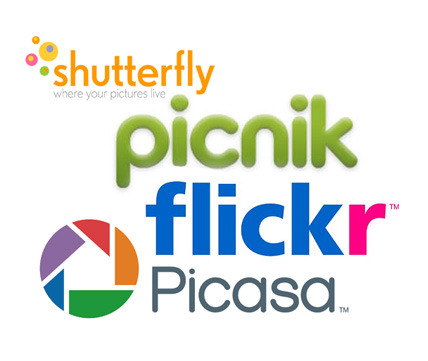
Good Design is Intentional. I was trying to get those logos to fit together for a newsletter but I was having some trouble. I knew there was a way and so I challenged my friend @kidsleepy.
It may seem easy or obvious after looking at the solution (as it did to me) but trying to puzzle things like this together and bring meaning to placement is part of the art of graphic design.
I love how the ascenders and descenders just work together in the final version.
Google’s upped its pace handing out invites to Google Voice, the service that controls all your phones with one number. For those just arriving, we’re offering up a beginner’s guide to setting up, transitioning to, bug-fixing, and actually enjoying Google Voice.
Once you accept an invite, register your number, and make your first text or phone call, you might be wondering how to go about actually using Google Voice—after all, nobody’s calling you on that number just yet, and your number doesn’t have any rules set up to begin with. That’s where this guide starts off. There are lots of resources that explain how Google Voice’s features work, but we’re hoping to help you learn how to get people calling that number, work past the flaws in its system, and manage
Latitude 48° 14 North. Longitude 174° 26 West.
Almost midnight on the North Pacific, about 230 miles south of Alaska’s Aleutian Islands. A heavy fog blankets the sea. There’s nothing but the wind spinning eddies through the mist.
Out of the darkness, a rumble grows. The water begins to vibrate. Suddenly, the prow of a massive ship splits the fog. Its steel hull rises seven stories above the water and stretches two football fields back into the night. A 15,683-horsepower engine roars through the holds, pushing 55,328 tons of steel. Crisp white capital letters — COUGAR ACE — spell the ship’s name above the ocean froth. A deep-sea car transport, its 14 decks are packed with 4,703 new Mazdas bound for North America. Estimated cargo value: $103 million.